How sub-brands strengthen your mission – my key lessons
And why a sub-brand only works if it solves something for your audience and is carried within your team.
The nice thing about blogging is that it can be meditative too. You step into retrospect, gain insights, document learnings and measure the impact of strategic choices you made earlier. And sometimes you find out that something that sounded logical to you doesn't resonate at all with the people you're doing it for: your audience.
In this case I'd like to dive into the specific functions and added value of sub-brands. What's their role exactly within a brand strategy, and what are the potential upsides – and pitfalls? Because at ON A DAILY BASIS we've designed plenty of sub-brands – for clients and for ourselves. And that taught us lessons. About when it works. And when it works against you.
What is a sub-brand?
According to David Aaker (Brand Portfolio Strategy), a sub-brand is a brand connected to a main brand, but with its own face, audience or proposition. Think: Google > Google Maps. You feel the sender, but the sub-brand has its own role.
Where does it fit within brand architecture?
- Branded House – one brand, multiple expressions (Virgin)
- Subbrands – recognisably connected, with their own character (BMW > BMW i)
- Endorsed Brands – own brand, backed by the parent brand (Nespresso by Nestlé)
- House of Brands – fully independent (Unilever > Dove, Axe)

When is a sub-brand strategy relevant?
There's no ready-made reason. Sub-brands often emerge from a combination of factors. See it as an orchestra of variables that only sounds good when everything fits.
What you should ask yourself before launching a sub-brand
- Does it clarify something for the audience?
Not whether you find it logical – but whether it solves something in the customer experience. - Is there genuinely a different need, market or context?
Think of a new audience, a different price range or an alternative tone of voice. - Is there brand friction within your main brand?
For example when you want to position a low-entry product next to a premium brand. - Do you want to test something outside of your main brand?
Without immediately putting your main brand at stake. (Personally, I find this often a very good reason.) - Is there strategic advantage in separation?
Think of other distribution channels, a different positioning or an alternative proposition structure.
A sub-brand only works if it solves something – for your audience, for your strategy, and if there's enough attention and resources to load it. Ask yourself (and your team): "Are we doing this for the outside world, or mostly for ourselves?" And try to be really honest about this.
How do you make sure a sub-brand actually delivers?
A sub-brand isn't a guarantee for success, even if the idea is right on paper. It also has to work in practice – for your audience, your team and your brand structure. So: how do you make sure it doesn't just sound good, but actually adds real value?
- Reason from the end user – not from your internal structure.
- Ensure substantive and visual differentiation – not a variation on a theme.
- Do you have enough capacity, attention and (what we call) love and caring?
- Link it smartly to your main brand – build on the trust.
Brands. Not just colors.
Most sub-brands don't die on the idea, but on execution. They're not loaded, maintained or carried. Then it's not a brand, but a stray name or a 'nice logo'. Without internal attention, it disappears from view by itself. So energy – in the form of time, actions and ownership – is everything.
With ON A DAILY BASIS we've deliberately developed two sub-brands that make our mission and vision tangible:
- ODB Radio – "tune into a new generation"
- ODB Sports Club – "when we play, we play to win"
ODB Radio – tune into a new generation
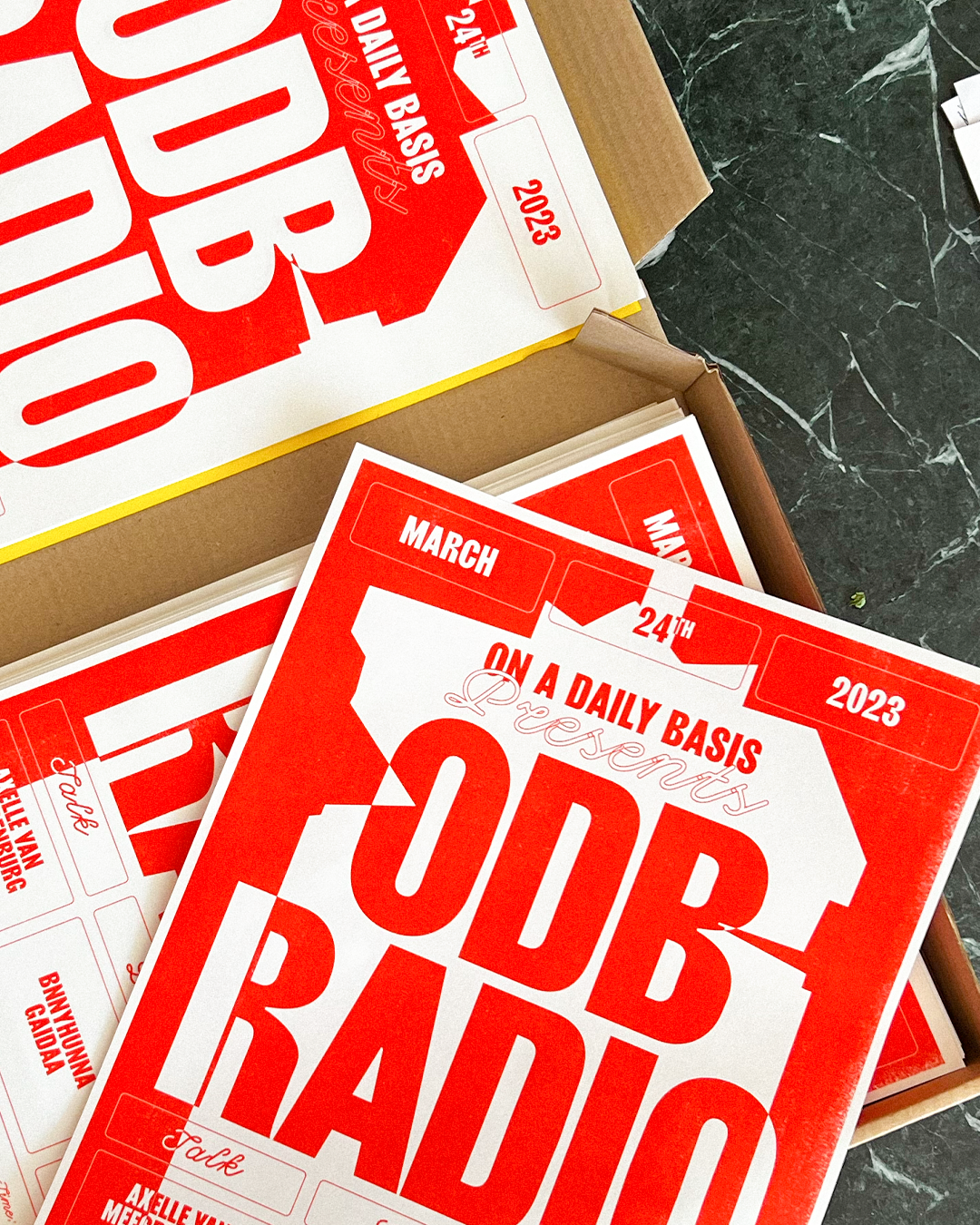
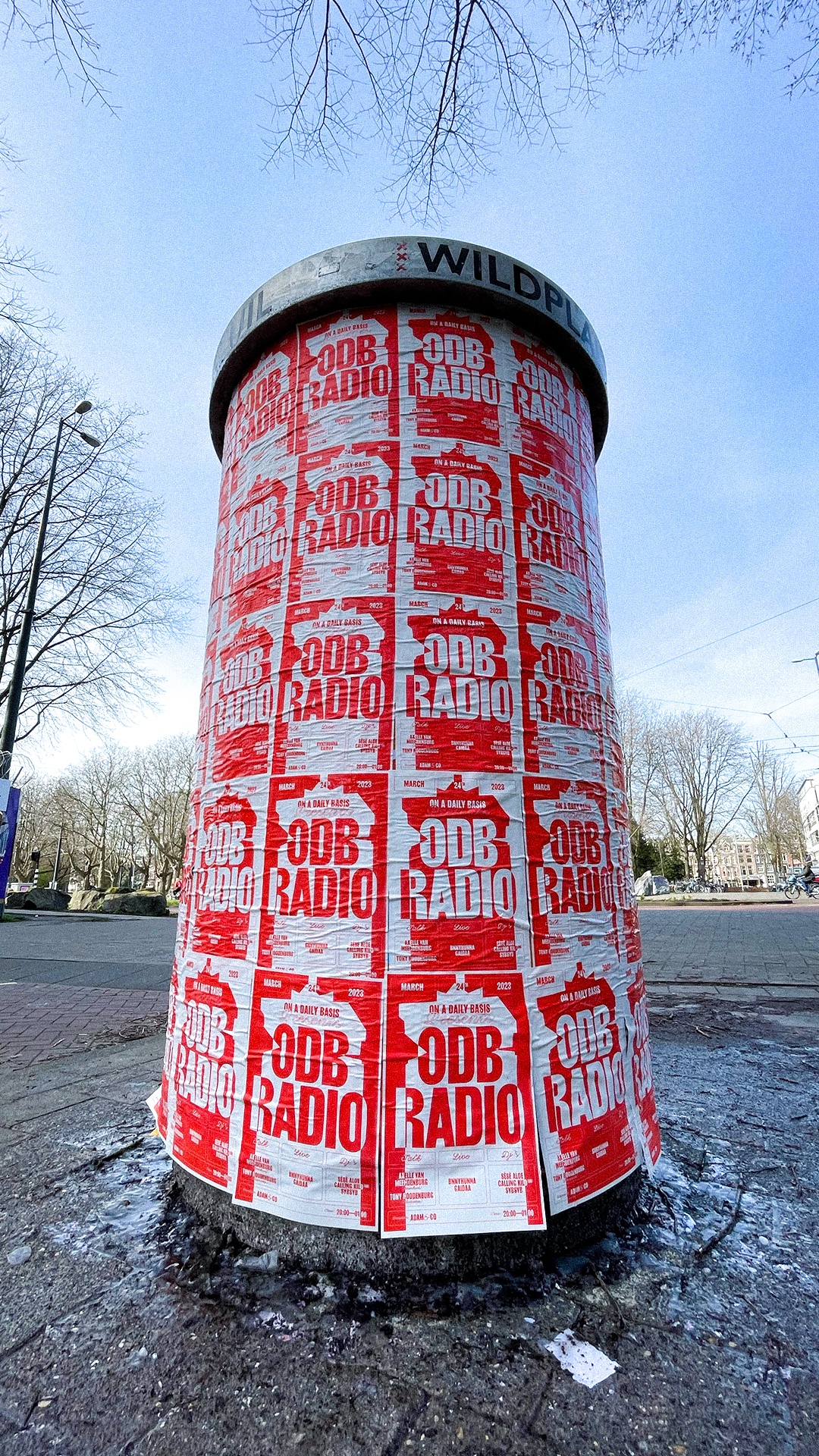
With ODB Radio we make ourselves heard – but we don't just broadcast. We listen, connect and give back. We organise talks, creative sessions, and have been hosting a fresh playlist every Monday for over 400 weeks. During ADE we hosted our own event in the A'DAM Tower. You get the point, it's about giving back. And because we believe ODB isn't a classic marketing agency, but a lifestyle brand.

ODB Sports Club – when we play, we play to win
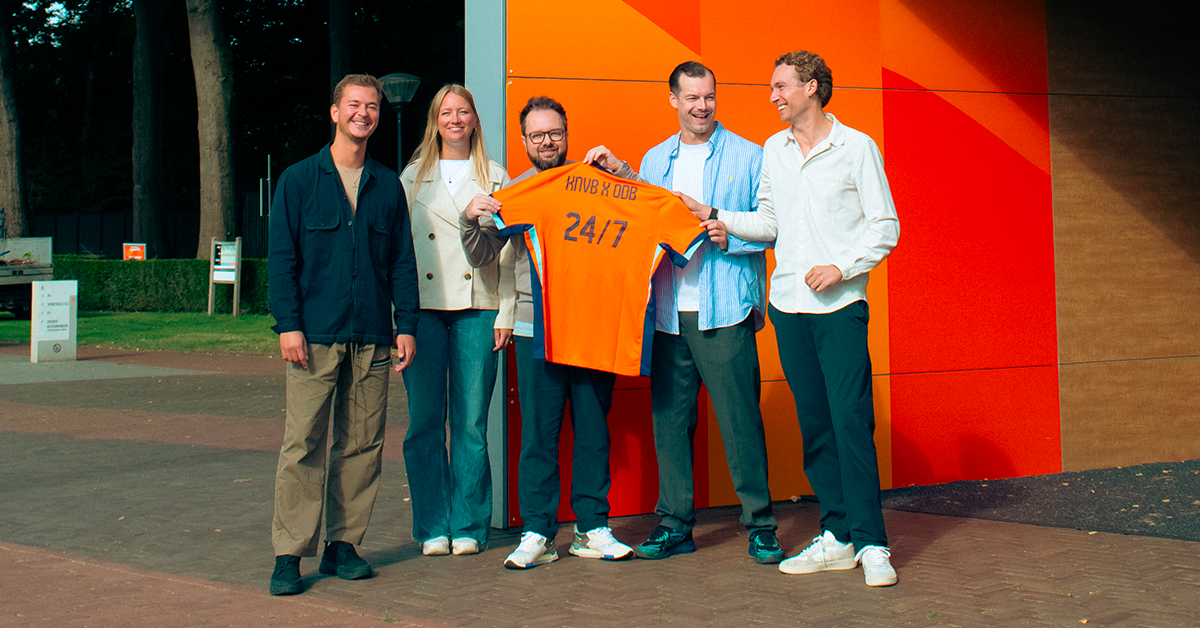
ODB Sports Club emerged from what we find important, not because we have sports clients. We believe a winner's mentality goes beyond just winning campaigns. It sits in how you collaborate, how you stay fit – physically and mentally – and how you show up every day with focus. We take part in marathons, sponsor athletes and have our own football team.
Whether we're training together, sparring about strategy or rolling out a new format: we believe sport and creativity are cut from the same cloth. Discipline, sharpness, endurance – that's what helps us grow, as a team and as a brand.

Both sub-brands create cultural relevance
They strengthen our positioning because we don't just show up in communities, we actively add value there. They build further on the foundation of ON A DAILY BASIS as the parent brand, and help us stay sharp on what's happening – not from assumptions, but by standing in the middle of the culture.
A small take-away with what we learned
A sub-brand only works if it's built on real necessity. If it solves something your main brand can't – for a specific audience, in a specific context. In our experience, the difference was never in the idea itself, but in the execution: is it carried, loaded and understood? Then it works. Is it a visual side project without a distinctive role or internal ownership? Then it bleeds out. You feel it instantly when something is alive – and when it's an extra logo you'd rather leave out of presentations. Because without energy, no brand.
Signing off. Your creative partner in crime. Yonah.
Geschreven door:
Further reading


Collaborate?
in crime

& Commercial Director


Check it out