Festivals as a media brand: future or necessity?
Festivals need to reinvent themselves as media companies, where content is no longer just promotion, but a strategic tool to generate revenue.

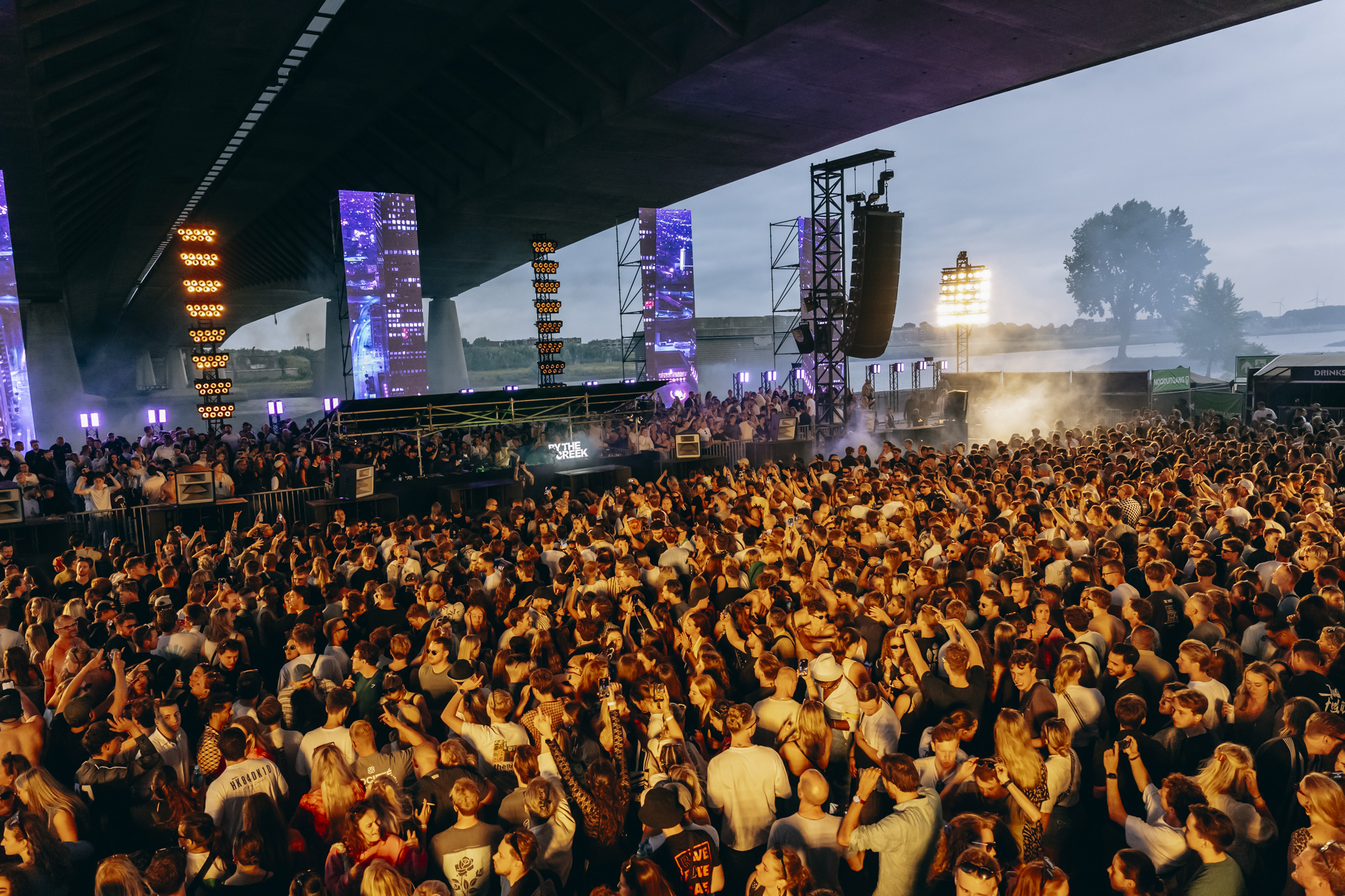
Festivals as media companies: future or necessity?
For years, festivals could rely on a familiar business model: ticket sales, brand activations and bar revenue. But that model is under pressure. The costs of production, tech and staff are rising. And audiences decide later, or choose something else.
In that context, festivals need to reinvent themselves, by getting more value out of something they have to make anyway: content.
What's now often seen as promotional material — an aftermovie, a few social posts, an announcement trailer — deserves a different role. Because anyone who views content as a standalone part of the strategy can not only reach an audience with it, but also generate revenue.
Content as a business model: these are the 4 routes
Festivals that take content seriously don't just create reach or engagement, they also build an extra revenue stream. Below are the main business models, directly applicable around the event itself.
1. Branded formats & partnerships
A video format, backstage series or podcast around your festival is worth gold — if you do it right. Brands love tapping into the energy of festivals, but increasingly they're looking for meaningful activation rather than logo placement.
By developing your own formats (before, during or just after the festival) and connecting partners to them, a concrete business model emerges. Think of a sponsor co-funding the backstage series, or a clothing brand financing an artist profile series.
Important: take the lead yourself, develop formats from your own identity and audience. Partners will naturally follow.
See here for example the collaboration between Jägermeister and the Bakkie Bakkie podcast from 2022. They went from festival to festival to discuss the latest music news.
2. Media rights and licensing
A well-captured live set, aftermovie or series of interviews has reusable value. Think of:
- Selling recordings to platforms
- Licensing for use in documentaries or media
- Partnerships with broadcasters or streaming services for recording
Especially during festival season, there's high demand for quality music content — and festivals sit on the source material. If you approach it professionally, you can generate licensing income from it (together with the artists), even without large-scale production.
Pinkpop does this on a large scale every year with NPO. This year too, there were broadcasts with performances and backstage interviews on Saturday 21 and Sunday 22 June in collaboration with NTR, VPRO and BNNVARA on NPO 3, NPO 2 extra, NPO start and 3FM.
3. Premium access to exclusive content
Livestreams of performances, backstage footage or interviews with artists — these are forms of content that part of your audience is happy to pay for. Not large-scale or mass, but just enough to make it a premium community layer.
You could think of:
- A "digital backstage pass" for livestreams or exclusive videos
- Smaller subscription formats around the festival moment (think: backstage access, pre-sale benefits, exclusive sessions)
This model doesn't run on volume, but on engagement. And festivals have communities that are extremely engaged.
DEDIQATED from Q-dance is a strong example of exclusive content as a business model: for an annual contribution, members get access to livestreams, backstage interviews and unique merchandise. This model runs on engagement and speaks to the most loyal fans. Members enjoy priority ticket sales and exclusive activities. That way, Q-dance creates extra value for their community and extra income.
4. Creation as a service
Festivals with a strong creative team can offer that capacity to partners too: during the festival itself or in the lead-up. Think of brands wanting to make videos on location, content collectives seeking access to the grounds, or artists wanting their own performance recorded professionally.
By organising that demand and facilitating it smartly, your content team becomes commercially relevant too — not just internally, but as a production module for third parties.
Content isn't marketing. It's a business model.
In a market where festivals have to fight harder for financial stability, content offers a way to get more out of your brand, your experience and your production. Not as a separate element, but as an integral part of the strategy.
You don't have to make a Netflix series. You don't have to start a radio station. But you do have to realise: the content you make also has commercial value for partners.
Once you take that seriously, new opportunities emerge: for business models, for visibility, and for a stronger position in a market that's getting more competitive.
How we can help festival organisations with this
For content to function as a business model, it needs a clear place within your organisation. That doesn't necessarily require big investments, but it does require structure, ownership and smart choices. We help festivals make that translation.
- Together we choose formats that suit your brand and audience. We help you focus on formats that are distinctive, scalable and commercially viable — without fragmentation.
- We bring structure to the content process. From who makes, who coordinates to who is responsible for partners and sales — we help set up a workable division of roles.
- We guide the collaboration with brands. Not just at the end, but up front — so branded content really connects with your festival's story.
- We think along about distribution. When, via which channel and for whom — so your content doesn't disappear in the noise but keeps its commercial value.
- We help you measure what works. No empty views or likes, but clear KPIs around reach, conversion, brand value or revenue-generating capacity.
Want to make content a serious part of your festival strategy? Then we'd love to think along with you, from concept to execution.
Geschreven door:
Further reading


Collaborate?
in crime
& Commercial Director


Check it out